
Your Jellyfin, at a glance.
Jellydash is a dashboard for your Jellyfin server. See who is watching right now, keep full play history, dig into statistics and get a ping on your phone when someone hits play.
Everything your server does, in one place
The same menu you get in the app. Click through the real thing.
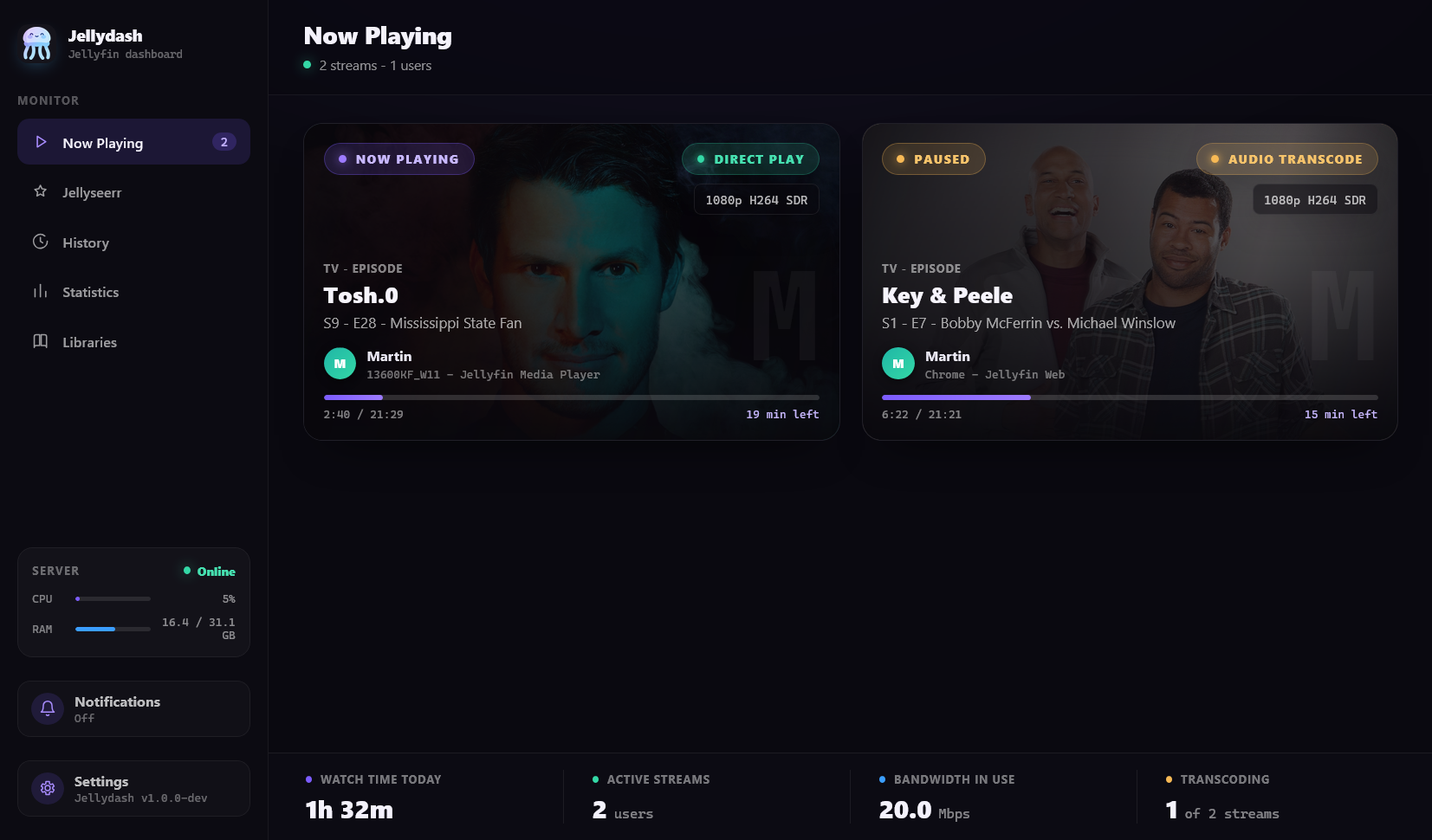
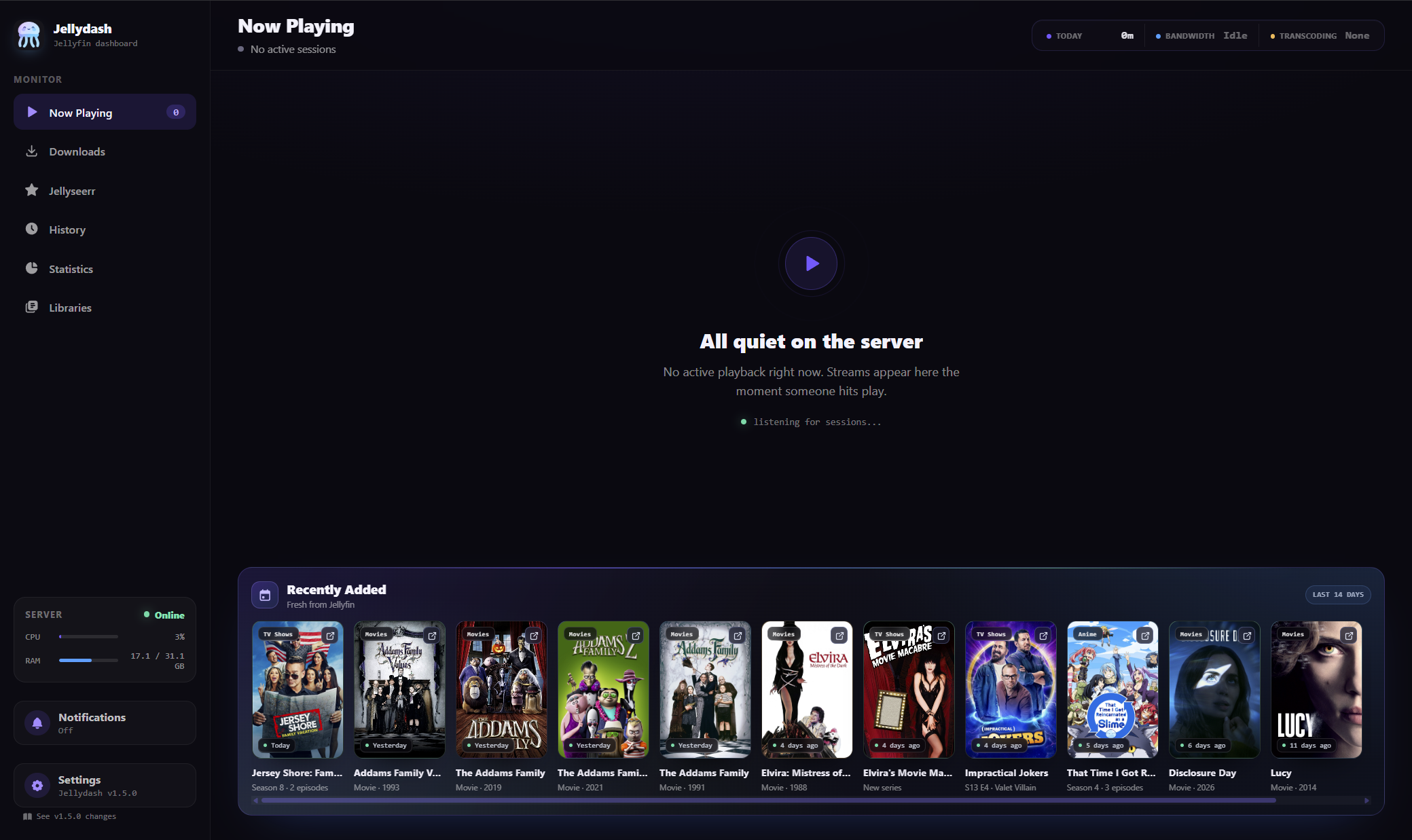
Live cards show artwork, user, quality, progress, and playback method. When the server is quiet, Recently Added opens up to keep fresh movies and shows close by.
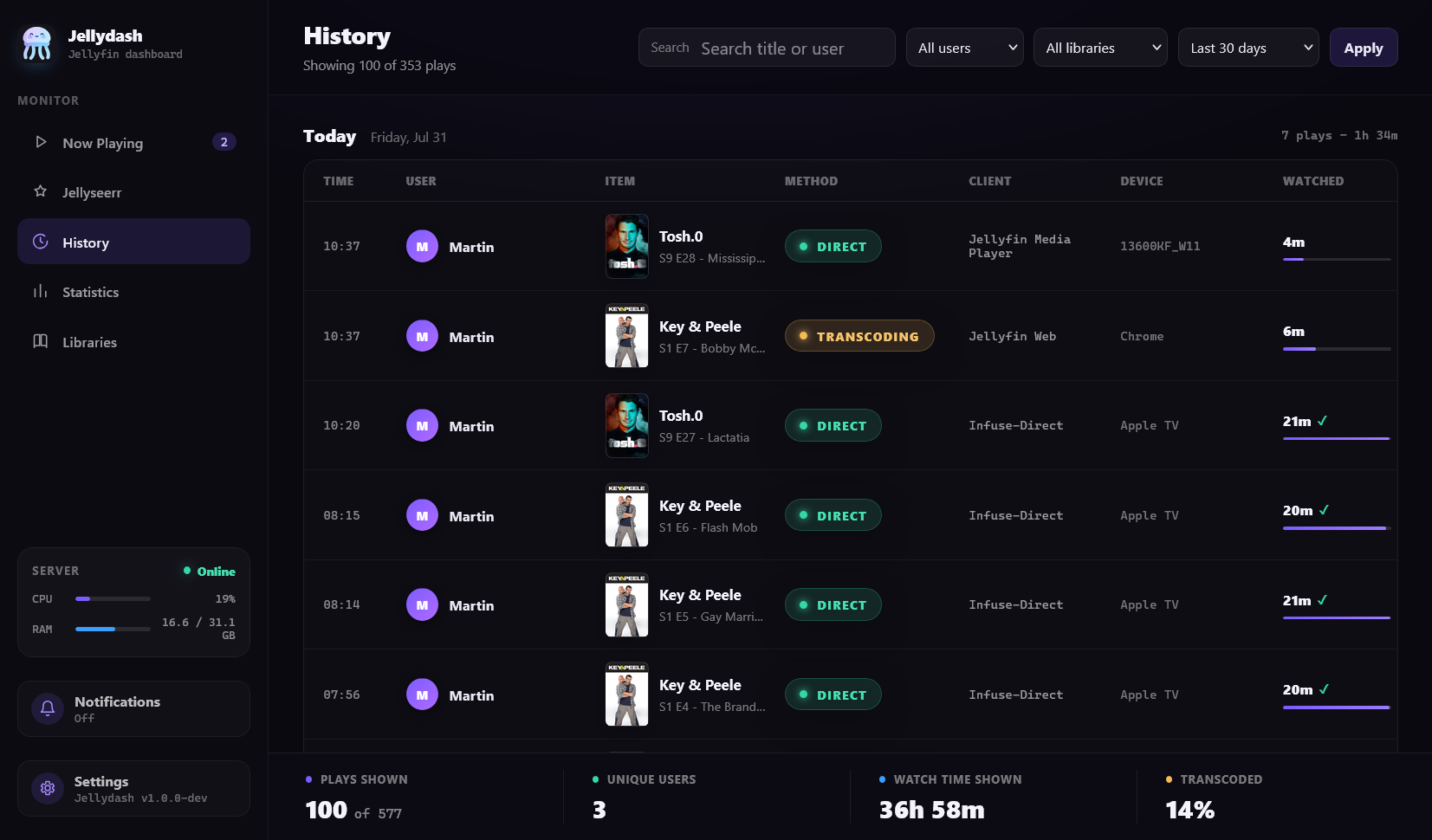
Every play gets recorded by a background poller, even when nobody has the dashboard open. Search it, filter it, browse older pages, or bring existing Playback Reporting history with you.
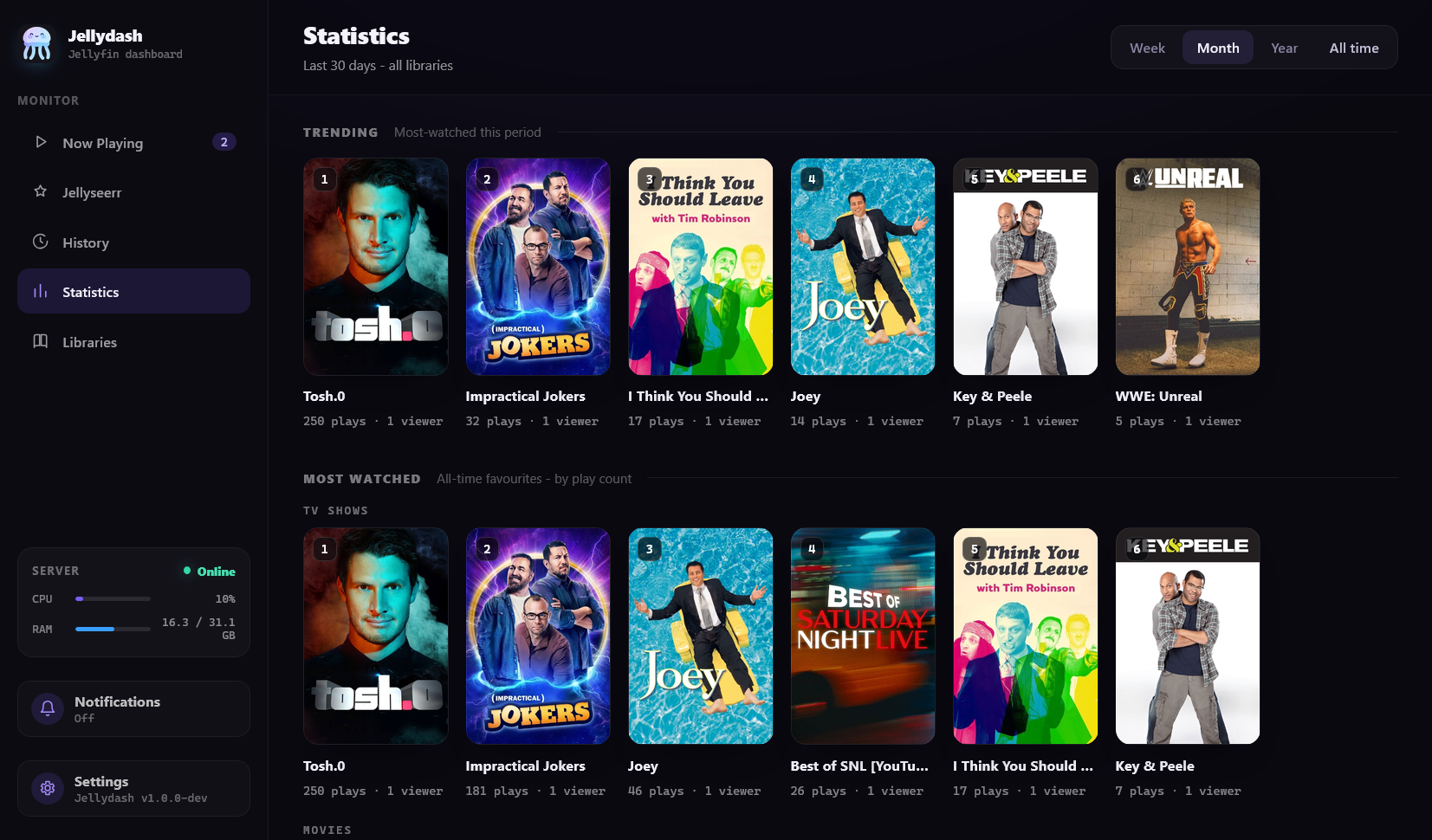
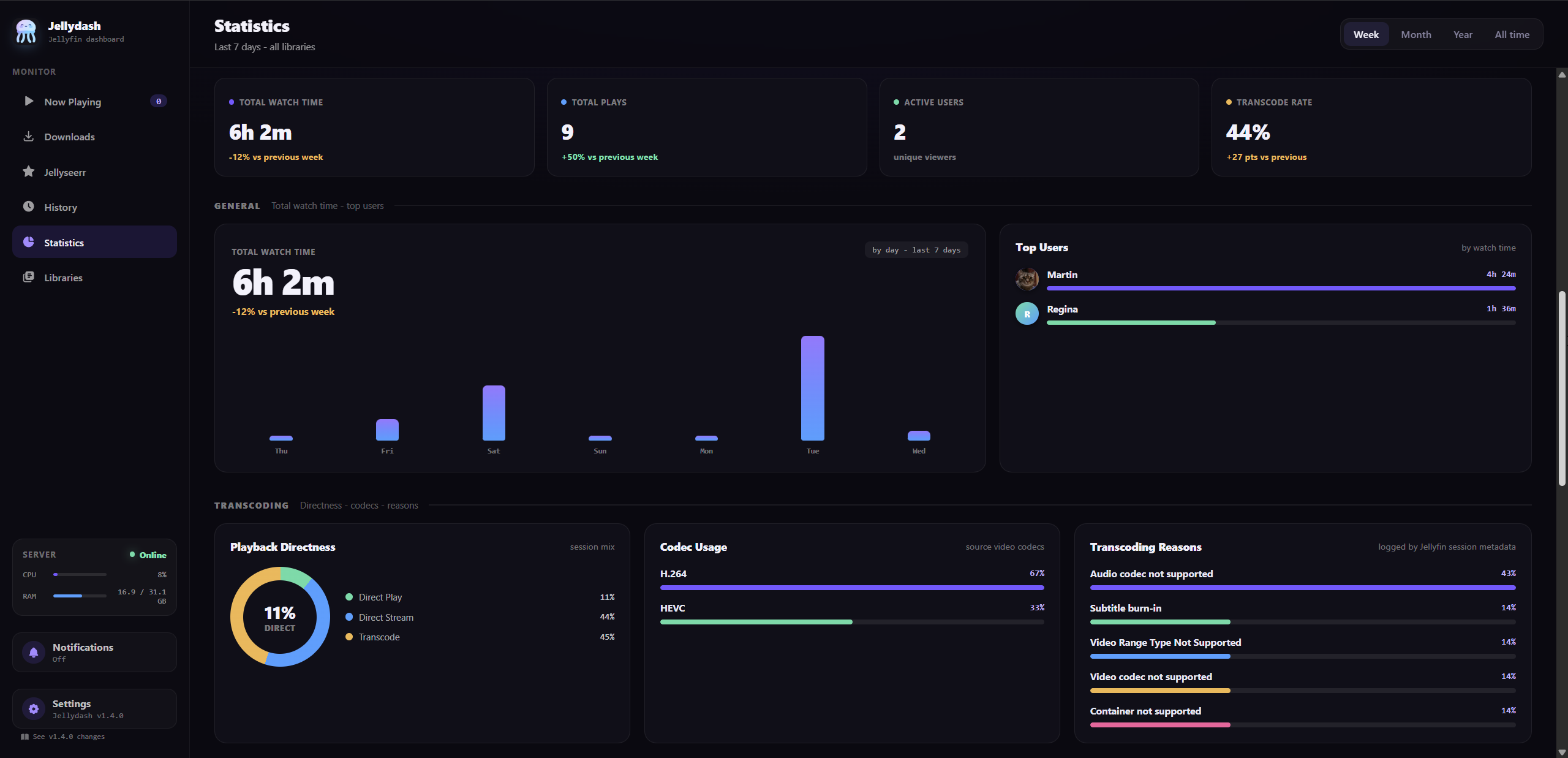
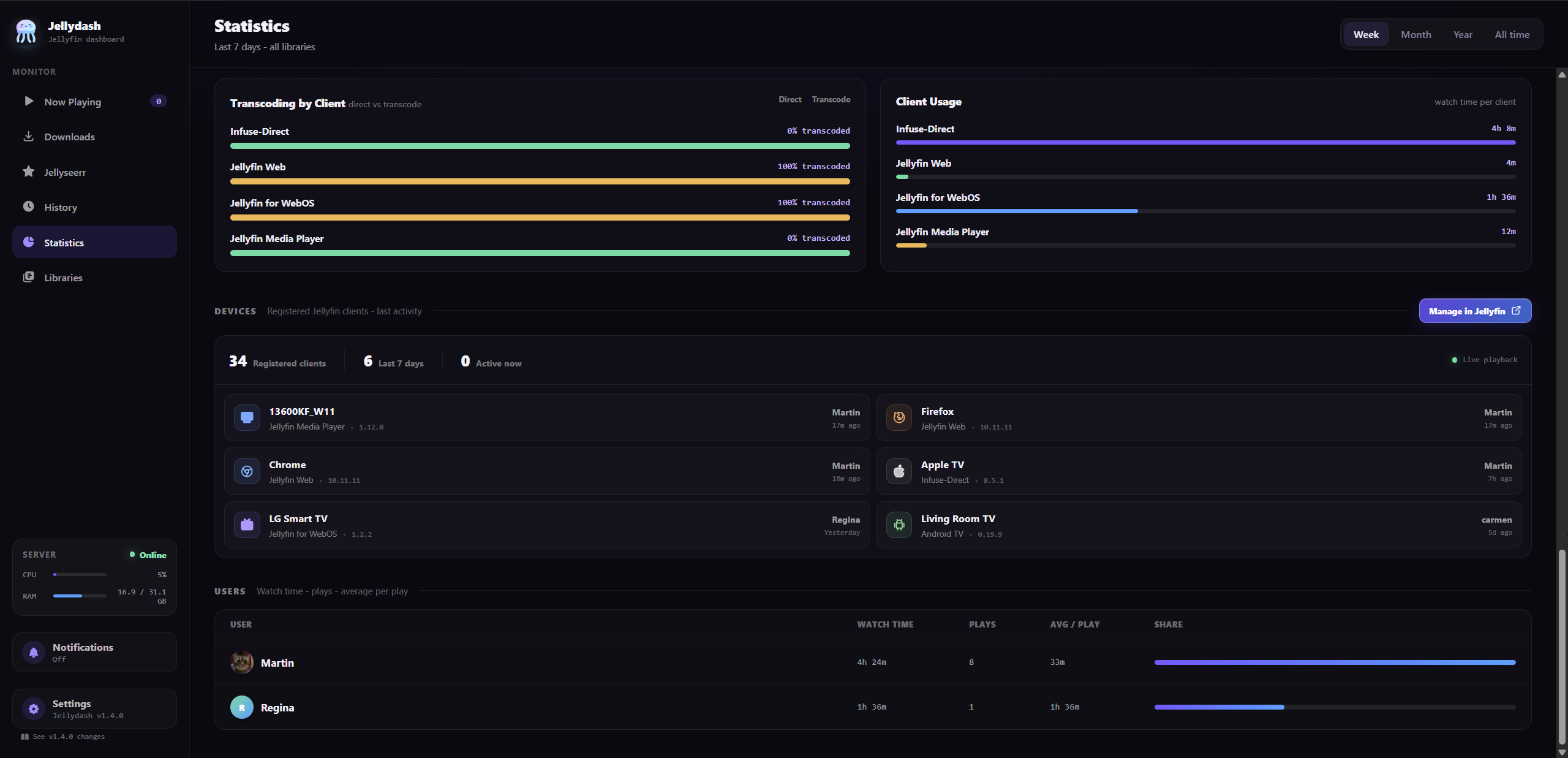
Watch time trends, top users, device activity, clients, codecs and transcode reasons. Plus a Trending strip, all-time Most Watched charts, and a Monthly recap for a completed month.
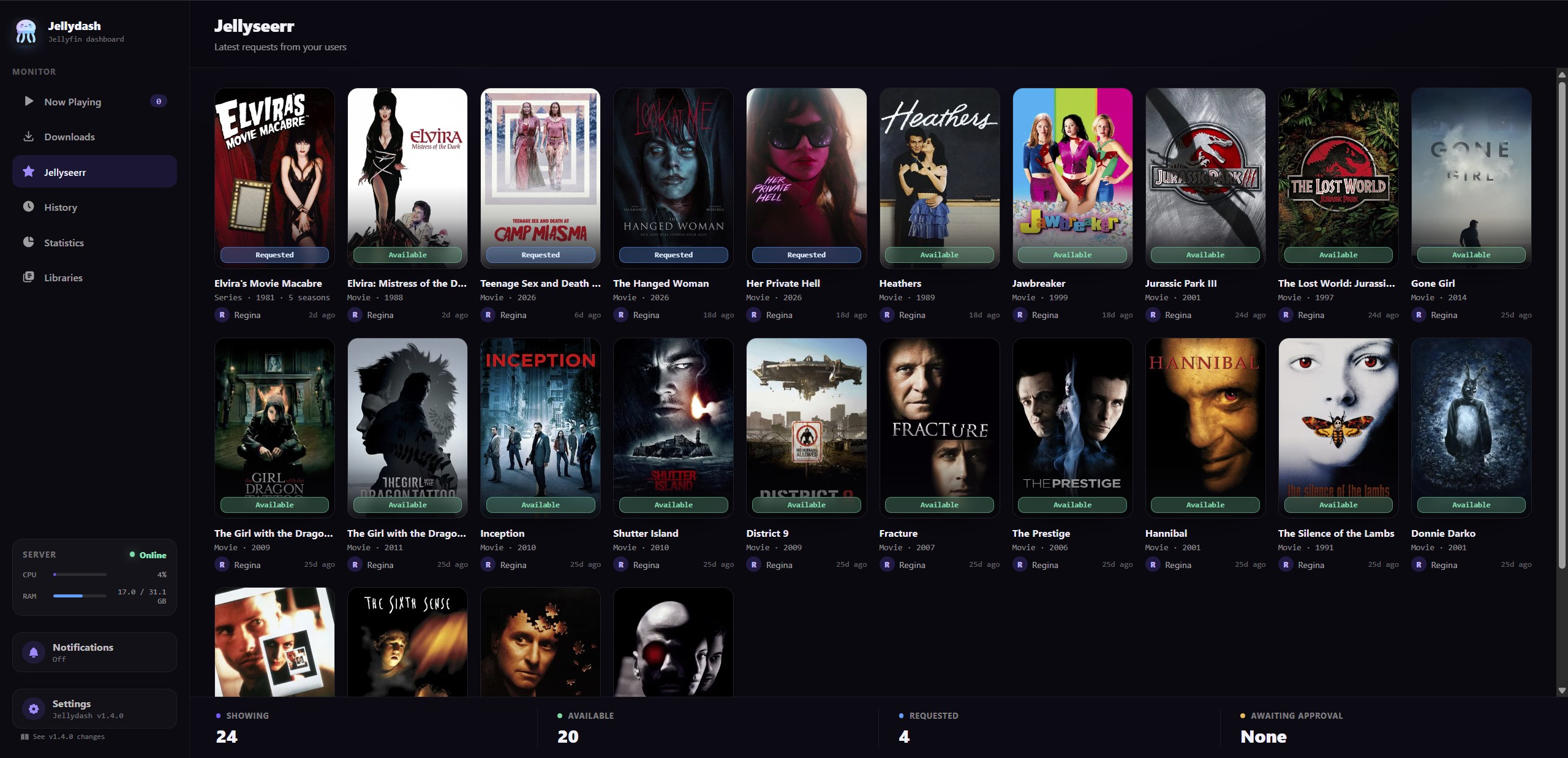
The latest Jellyseerr requests with their status, and an alert the moment someone requests something new. The page appears once you connect your instance.
Your phone knows first
Someone starts playing, you get a ping. A new Jellyseerr request lands, you get a ping. Pick Telegram, Pushover, Discord, Web Push, ntfy, or Gotify. Every configured channel gets every alert.
▶ Anna started watching
The Office · S3 E2 · Direct Play
Web Push works in the browser and the installed app. Telegram, Pushover, Discord, ntfy, and Gotify deliver alerts through their own apps or servers.
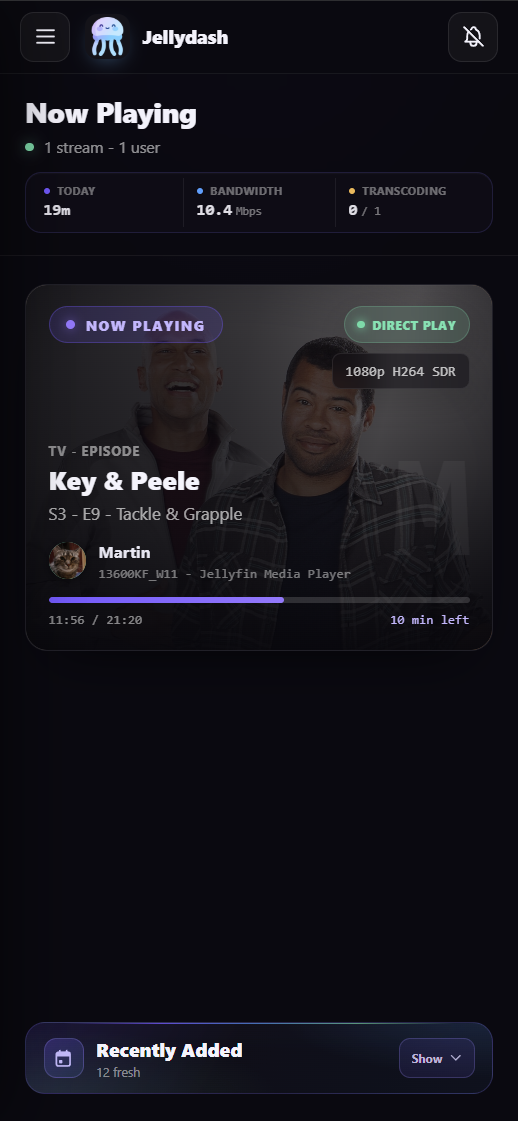
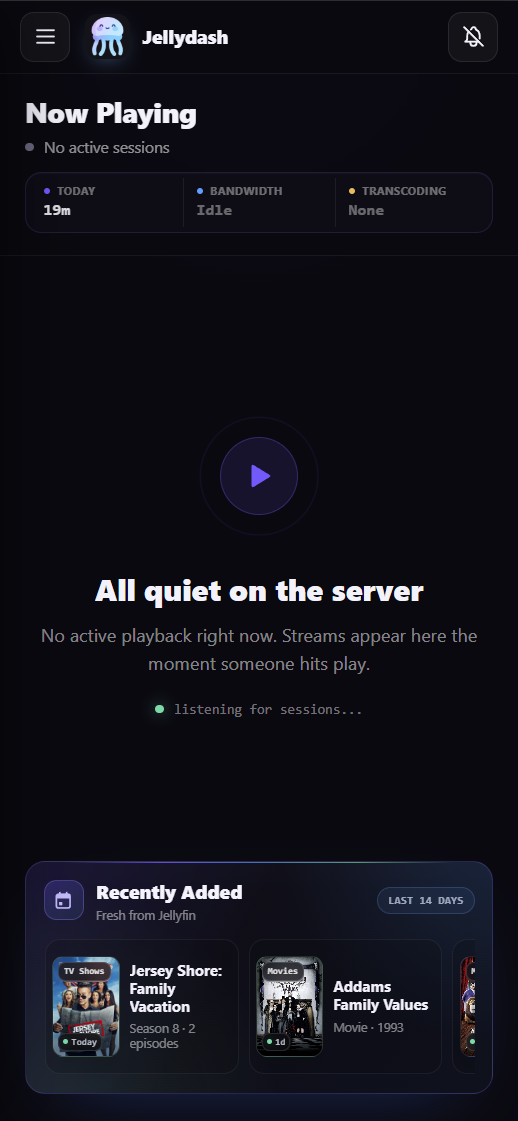
Add it to your home screen and it behaves like a real app, with its own window and icon.
Extend the dashboard with your own pages. A folder and a manifest is all a module needs.
Off by default for trusted home networks. One env var turns it on for anything public.
Choose bundled MariaDB or one-file SQLite. Either way, the database creates itself on first run.
Search Jellydash on the Apps tab and hit Install. The template is a single SQLite container.
MariaDB, SQLite, or Unraid
mkdir jellydash && cd jellydash
curl -LO https://raw.githubusercontent.com/themartz90/jellydash/main/docker-compose.yml
curl -L -o .env https://raw.githubusercontent.com/themartz90/jellydash/main/.env.example
# edit .env, at minimum: JELLYFIN_URL, JELLYFIN_API_TOKEN, DB_PASS
docker compose up -d
Compose installs open at http://your-host:8080. Unraid: listed in Community Apps as a SQLite template; keep an existing Compose install if you already have one. The README covers Unraid fields, migration, notifications, login and building from source.